
Comparison guide
Bamboo decking vs hardwood decking vs composite decking.
Choosing between bamboo decking, tropical hardwood boards (Ipe, Cumaru) or composite? Here is an objective, fact-based comparison to help you pick the right material.
Comparative data
The comparison at a glance
10× more stable than IpeTimber data from CIRAD species sheets, bamboo data from laboratory test reports.
| Species | Density (kg/m³) | Brinell hardness (N/mm²) | Swelling, width (%) | Durability class | Maintenance | Warranty | Repair | Resource renewal |
|---|---|---|---|---|---|---|---|---|
| dasso.CTECH® / dasso.XTR® | 1150 – 1200 | 80 – 100 | 0.6 | 1 | Cleaning + oiling depending on exposure | Up to 25 years (structural) | So stable it barely moves: after decades, a single sanding restores an almost-new look | 4–5 years, no replanting needed |
| Ipe | 1000 – 1200 | 60 – 70 | 6.4 | 1 | Cleaning + oiling depending on exposure | Usually none | Can be sanded and repaired, but the boards move a lot over the years — that movement cannot be repaired | 60–80 years — Amazon rainforest |
| Cumaru | 1050 – 1150 | 57 – 65 | 7.7 | 1 | Cleaning + oiling depending on exposure | Usually none | Can be sanded and repaired, but the boards move a lot over the years — that movement cannot be repaired | 50+ years — Amazon rainforest |
| Oak | 680 – 720 | 34 – 37 | 9.6 | 2 | Cleaning + oiling depending on exposure | Usually none | Can be sanded and repaired, but the boards move a lot over the years — that movement cannot be repaired | 60–100 years |
| Merbau | 830 – 880 | 46 – 52 | 4.4 | 1 | Cleaning + oiling depending on exposure | Usually none | Can be sanded and repaired, but the boards move a lot over the years — that movement cannot be repaired | 80+ years — Southeast Asia |
| Composite | ≈ 1400 | — | — † | Varies by manufacturer | Cleaning only | 10–25 years depending on brand | Cannot be repaired | Fossil resource (plastic) |
Harder, denser, more impact-resistant — and ten times more dimensionally stable across the width than Ipe: the board barely moves.
† Composite barely swells in width from humidity, but it dilates significantly along its length with heat (thermal expansion) — a different phenomenon from wood and bamboo, which move with moisture, so the two cannot be compared in the same column.
Sources: CIRAD (Tropix) species sheets for timber; independent laboratory testing for dasso densified bamboo.
Greying & maintenance: what to know
Like any timber exposed to UV, dasso bamboo greys on the surface. It is purely cosmetic: no loss of mechanical properties, and the warranty remains fully valid.
To keep a warm tone, a cosmetic maintenance once a year is enough: cleaning, then applying a suitable saturating oil.
After 20 years, belt-sanding restores an almost-new appearance: only the surface oxidises, the board itself has not moved.
Slip resistance: like a tropical hardwood
On outdoor decking, densified bamboo behaves like a tropical hardwood in terms of slip: no particular issue for a terrace.
- Stairs and sensitive areas: install with the reeded face visible, making sure traffic runs perpendicular to the grooves.
- Higher requirement: choose dasso.XTR® UltraGrip, surface-textured, for R11 slip resistance.
Bamboo vs composite (WPC)
Composite's only advantage: it does not change colour.
But a composite board that is scratched or damaged on the surface cannot be repaired. Densified bamboo can be sanded: after 20 years, sanding restores an almost-new appearance.
Our analysis
Why more and more architects choose bamboo
Densified bamboo decking combines what no other material offers at once: the hardness and durability of a premium tropical hardwood, the stability of an engineered product, and a positive carbon balance.
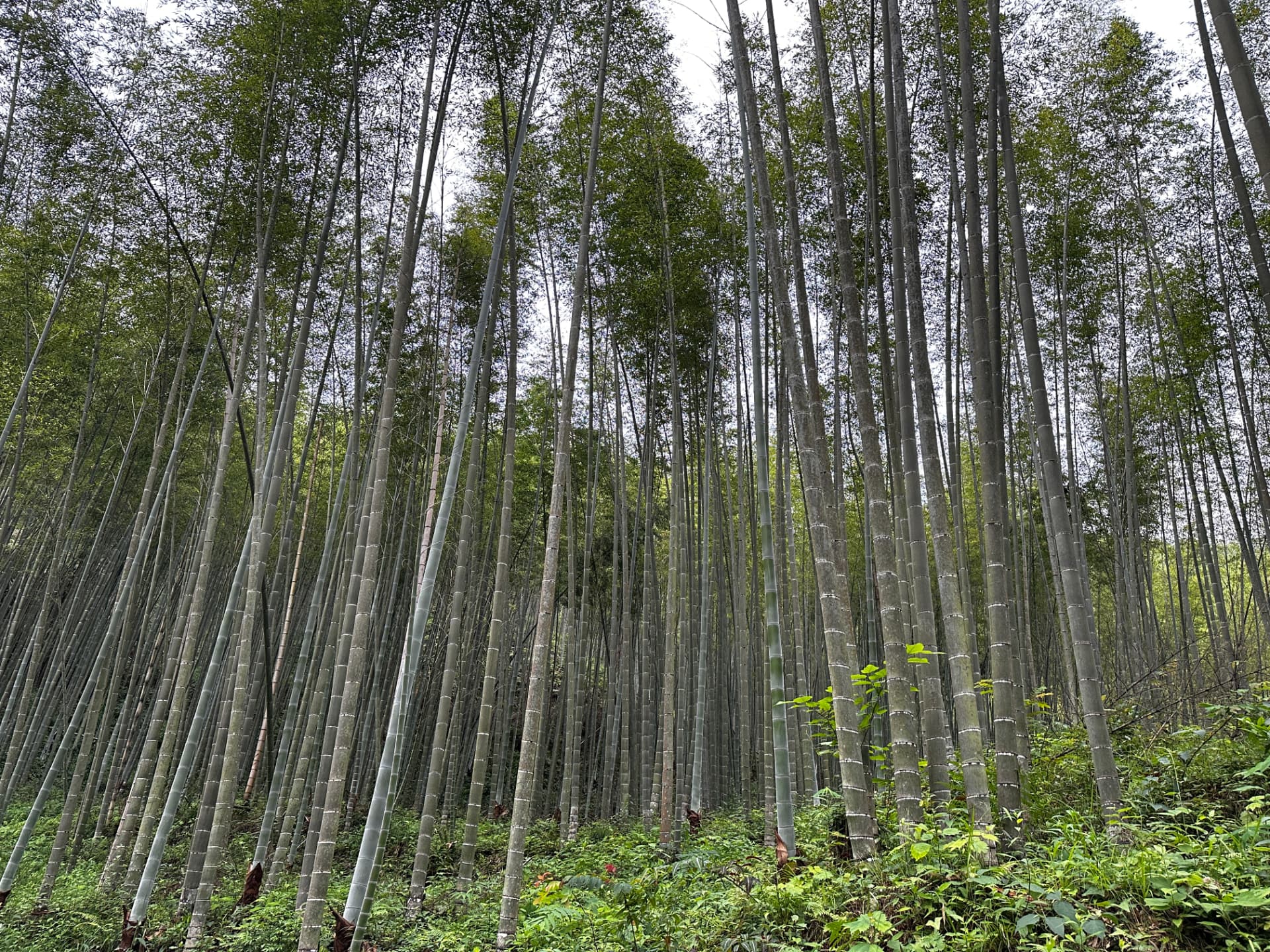
While Ipe and Cumaru rely on primary tropical forest harvesting, Moso bamboo regenerates in 4 to 5 years without replanting. And unlike composite boards, our decking contains no plastic and no fossil-based resin.
Frequently asked questions
Everything about bamboo decking
Is bamboo decking any good for outdoor use?
Yes — provided you choose engineered bamboo. dasso CTECH® and XTR® boards are thermo-densified: the bamboo is compressed and heat-treated to 1,150–1,200 kg/m³, denser than Ipe. They reach use class 1, the highest rating for outdoor applications, with a structural warranty of up to 25 years.
How do I clean and maintain a bamboo deck?
Cleaning with water and a brush or a suitable cleaner is enough. Like any natural material, bamboo greys under UV: applying a finishing oil depending on exposure keeps the original tone. Without maintenance it simply develops a silver-grey patina without losing performance.
Is bamboo decking slippery?
No. The grooved surface of dasso boards and their fibrous structure provide excellent grip, even when wet. The XTR® UltraGrip version reaches R11 slip resistance, suitable for pool decks and public spaces.
What is the difference between bamboo and composite decking?
Composite boards mix wood flour and plastic: they heat up strongly in the sun, expand, and are rarely recycled. Densified bamboo is 100% natural (bamboo + formaldehyde-free adhesive), stores 1.65 tonnes of CO₂ per m³ and offers the feel of real premium wood.
Bamboo or Ipe decking: which should I choose?
Both offer class 1 durability, but densified bamboo is denser (1,200 kg/m³ vs ≈ 1,050), more dimensionally stable, warranted for 25 years, and does not contribute to Amazon deforestation. Ipe needs 60 to 80 years of growth; Moso bamboo regenerates in 4 to 5 years.
How to install bamboo decking?
Just like a conventional timber deck: on joists, with fixing clips. dasso offers CTECH® bamboo joists (under CSTB Avis Technique in France) and dedicated stainless-steel clips for fast, invisible installation. Detailed installation guides are available in our Resources section.
Planning a bamboo decking project?
Our European team advises you free of charge on product choice, quantities and installation.